
Publication Alert: The Animals Behind the Animals — Rethinking Feeder Animal Welfare in Zoos
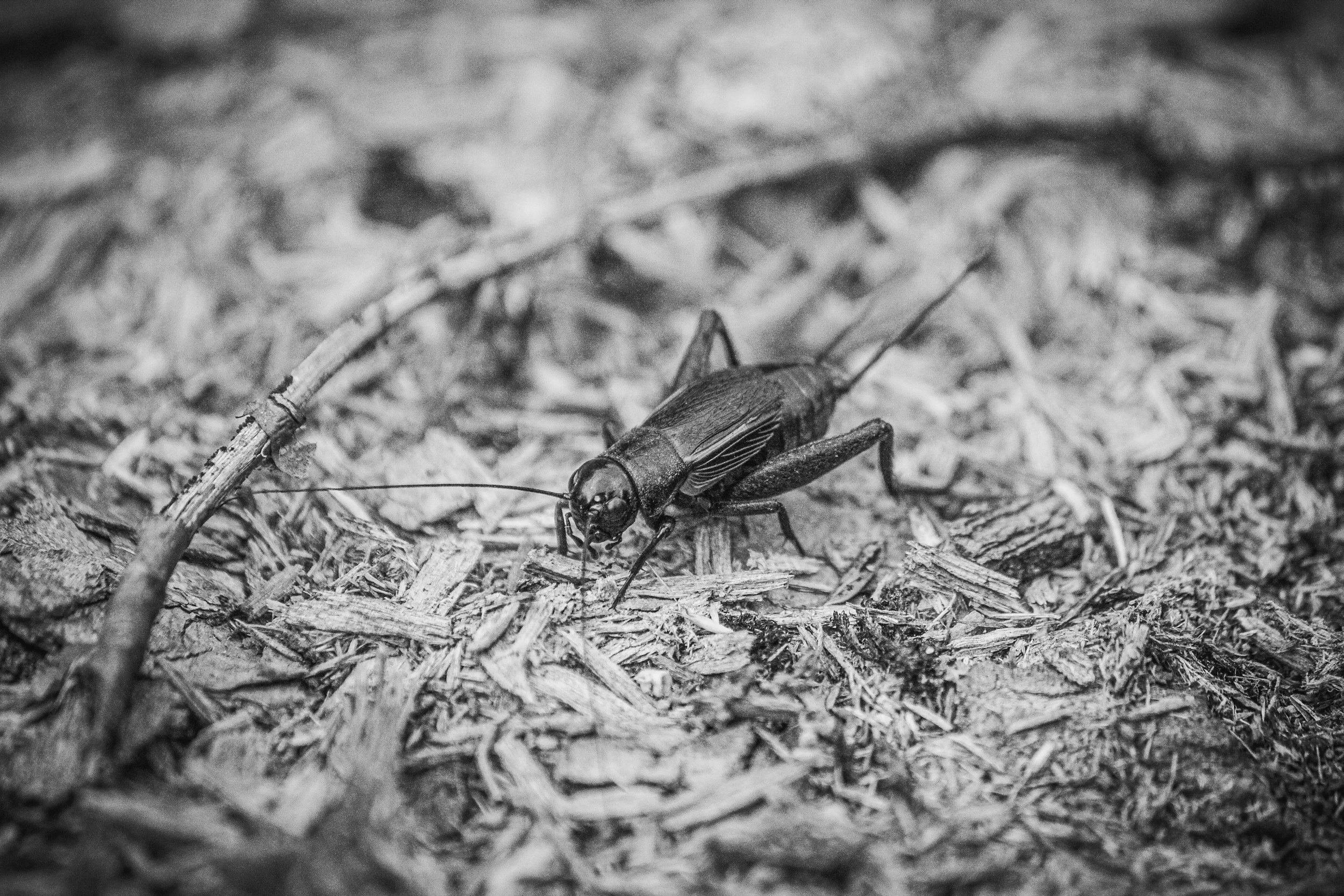
Juvenile cricket
Beyond the Exhibit: Addressing the Welfare of Feeder Animals in Zoological Institutions (O’Brien, Fischer & Barrett 2026; Zoo Biology)
Conflicts of Interest: MB is the Director of the Insect Welfare Research Society, and BF the Treasurer of the IWRS (unpaid).
If you’ve ever visited a zoo or aquarium and spent time watching a lion, an eagle, or an octopus in an exhibit, you might have thought about that animal’s welfare. Accreditation bodies like the AZA have extensive, species-specific guidelines for exhibit animals to help support these animals’ well-being.
But what about the mice, the crickets, the mealworms, the fish that are fed to the exhibit animals, often as live feed — the animals behind the animals? One institution reported using over 250,000 feeder animals per week. Scaling that across the more than 200 AZA-accredited institutions in the US alone, we’re likely looking at tens of millions of feeder animals consumed every week. And the guidelines governing their care are sparse. The AZA’s existing humane management guidelines for feeder animals cover only terrestrial vertebrates — leaving invertebrates, which make up the vast majority of feeder animals by both diversity and number, almost entirely unaddressed.
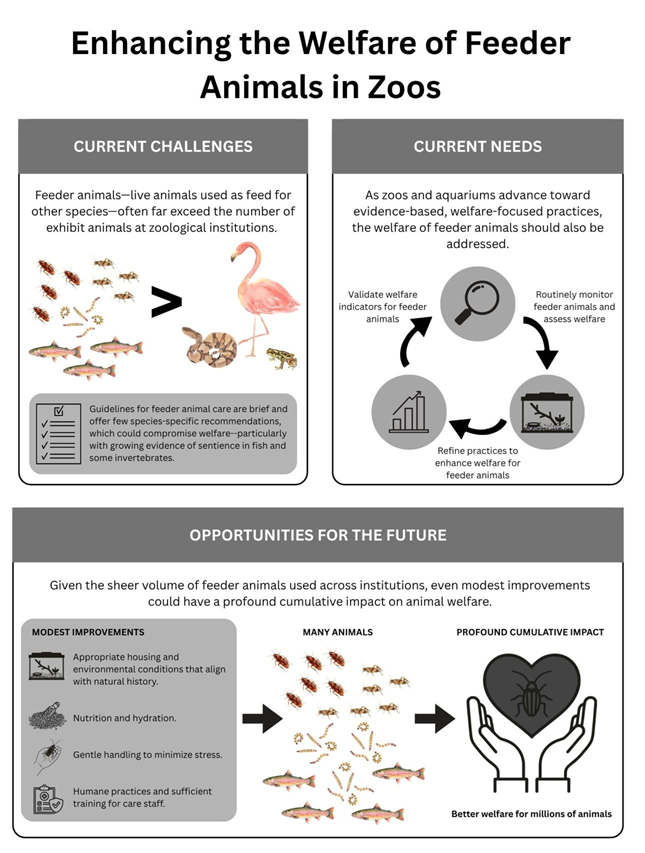
Graphical abstract for the paper. C/O’Brien et al. 2026
This paper offers a practical framework for zoos and aquaria looking to think more carefully about the ethical use of feeder animals while making the case the evidence for sentience in these feeder taxa is strong enough to warrant some precautionary moral consideration. We structure our recommendations around the 3Rs framework — Replacement, Reduction, and Refinement — which most readers will know from the animal research context but which translates naturally to feeder animal use:
Replacement: Where viable non-animal alternatives exist and predators can be conditioned to accept them, live feeder animals should be replaced.
Reduction: Institutions should avoid overfeeding, maintain healthy feeder colonies to reduce unnecessary purchasing, and explore training predators to accept pre-killed prey (which is also a welfare improvement for the feeder animal, whose euthanization is likely to be less stressful or injurious than being predated).
Refinement: Housing and husbandry for feeder animals should be informed by species-specific natural history. Feeder animals should receive routine welfare assessments. During feeding events, live animals should be humanely euthanized where possible, and where live feeding is necessary, steps should be taken to minimize prey suffering — introducing only a few prey at a time, supervising feeding, and removing injured uneaten prey.
The paper also includes an example welfare assessment for feeder animals, adapted from a previously published species-general tool, covering diet, environment, physical condition, and feeder-specific considerations like gut-loading and body part removal.
The sheer scale of feeder animal use in zoological institutions means that even modest, incremental improvements in welfare practices could benefit an extraordinary number of animals. Zoological institutions are particularly well-positioned to lead on animal welfare here: they have the animals, the expertise, and the institutional structure to support more humane practice.
Want to read more news from the lab?