
Publication Alert: Chronic Prepupal Handling and Pupation Substrate Affect Adult BSF Development
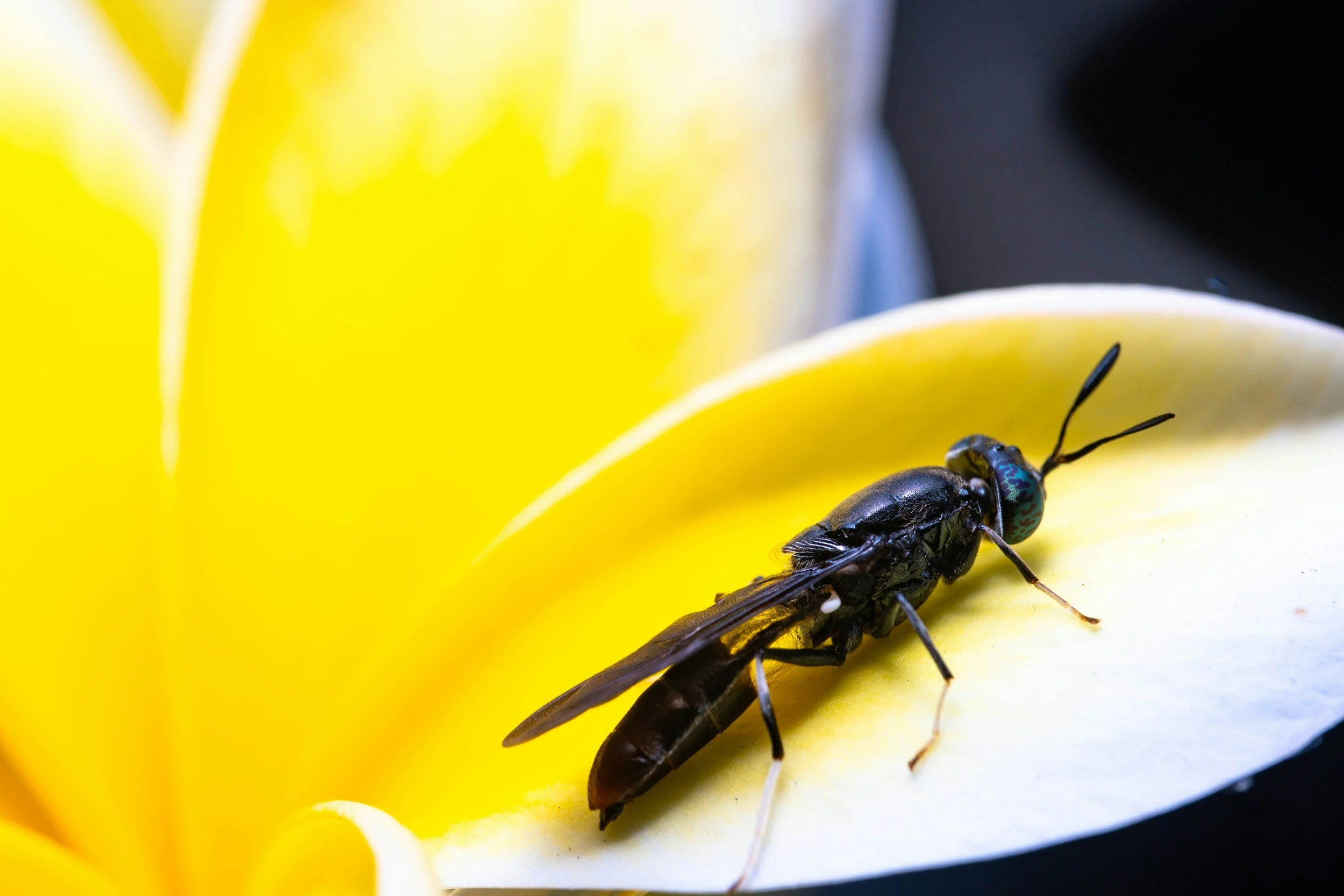
BSF adult (Unsplash)
Pupation substrate and prepupal handling affect eclosion and adult morphology in black soldier flies (Durosaro et al., 2026; Journal of Insects as Food and Feed)
Black soldier fly prepupae are at a sensitive developmental stage - they are post-feeding, wandering and looking for a pupation substrate to continue their development. This study assessed if the type of pupation substrate provided (wood chips, frass, corn cob grits, and potting soil), the moisture content of the substrate (20- 100%), and daily, short bouts of handling could impact their development, survival, and the morphology of the flies after reaching adulthood.
Daily handling had large effects on development, survival, and morphology. Development time was delayed by >3 days in both males and females:
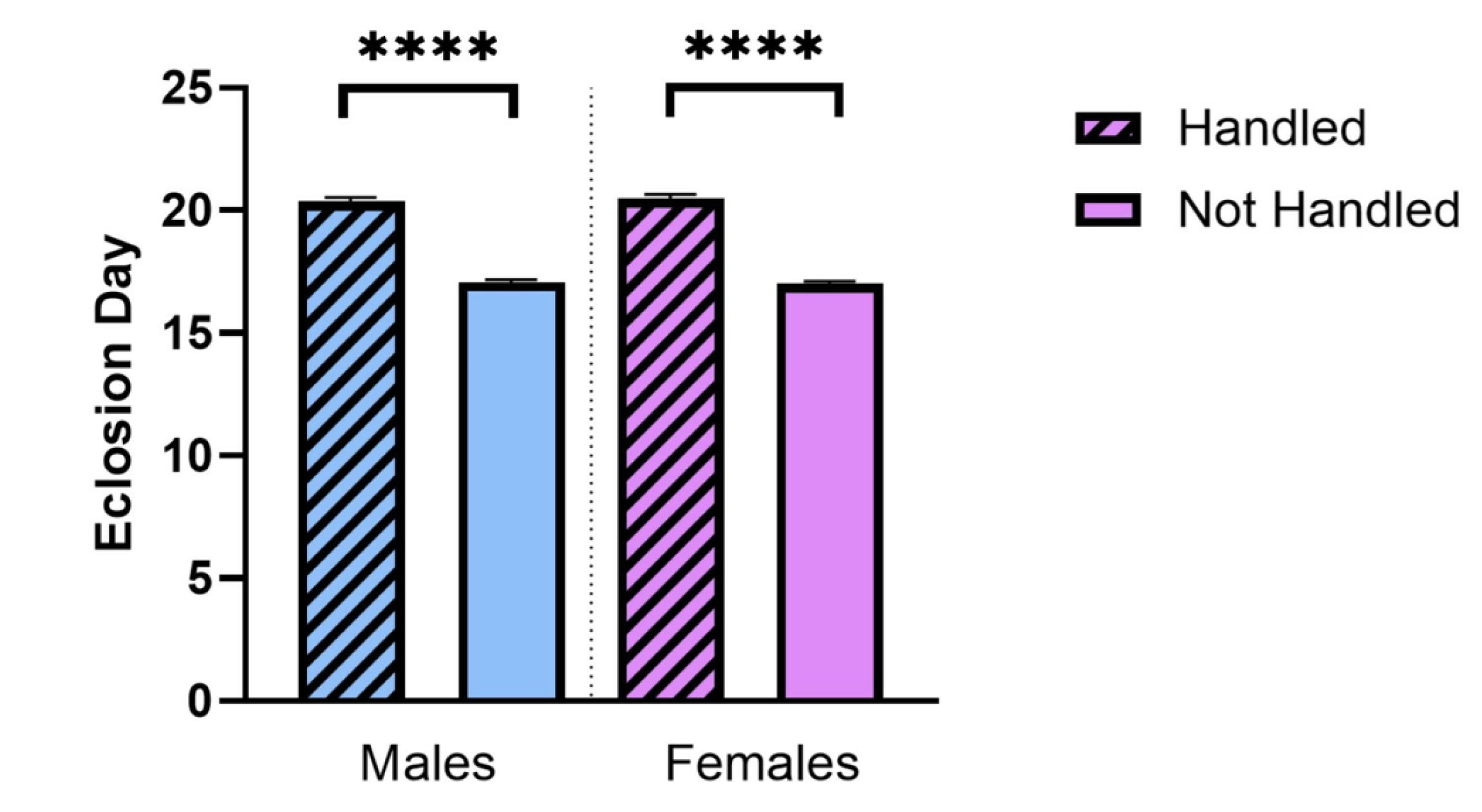
Eclosion day is delayed by >3 days as a result of daily handling in BSF prepupae. Substrate, initial moisture content, and all two-way interactions were not significant predictors of eclosion day. (Males: GLMM, Poisson with log link; n = 700, χ2=98.11, **** p<0.0001; females: n = 664, χ2=104.23, **** p<0.0001). Bar graph shows mean and SE. Only individuals that eclosed by day 30 were included in this analysis.
Survival was also significantly reduced by 30.6% as a result of daily handling (61.9 ± 1.9% in handled cups vs 92.5 ± 0.9% in non-handled cups), with the largest impacts in frass and potting soil.
Handling also reduced most measures body size in males and females (e.g., smaller head width, body mass) and reduced female window fullness (the amount of fat in the fat body) by ~2%.
Substrate type also impacted male and female body mass and survival, with the best substrates to maximize these two effects being wood chips and corn cob grits. Frass consistently reduced both survival and body mass compared to some of the better-performing substrates.
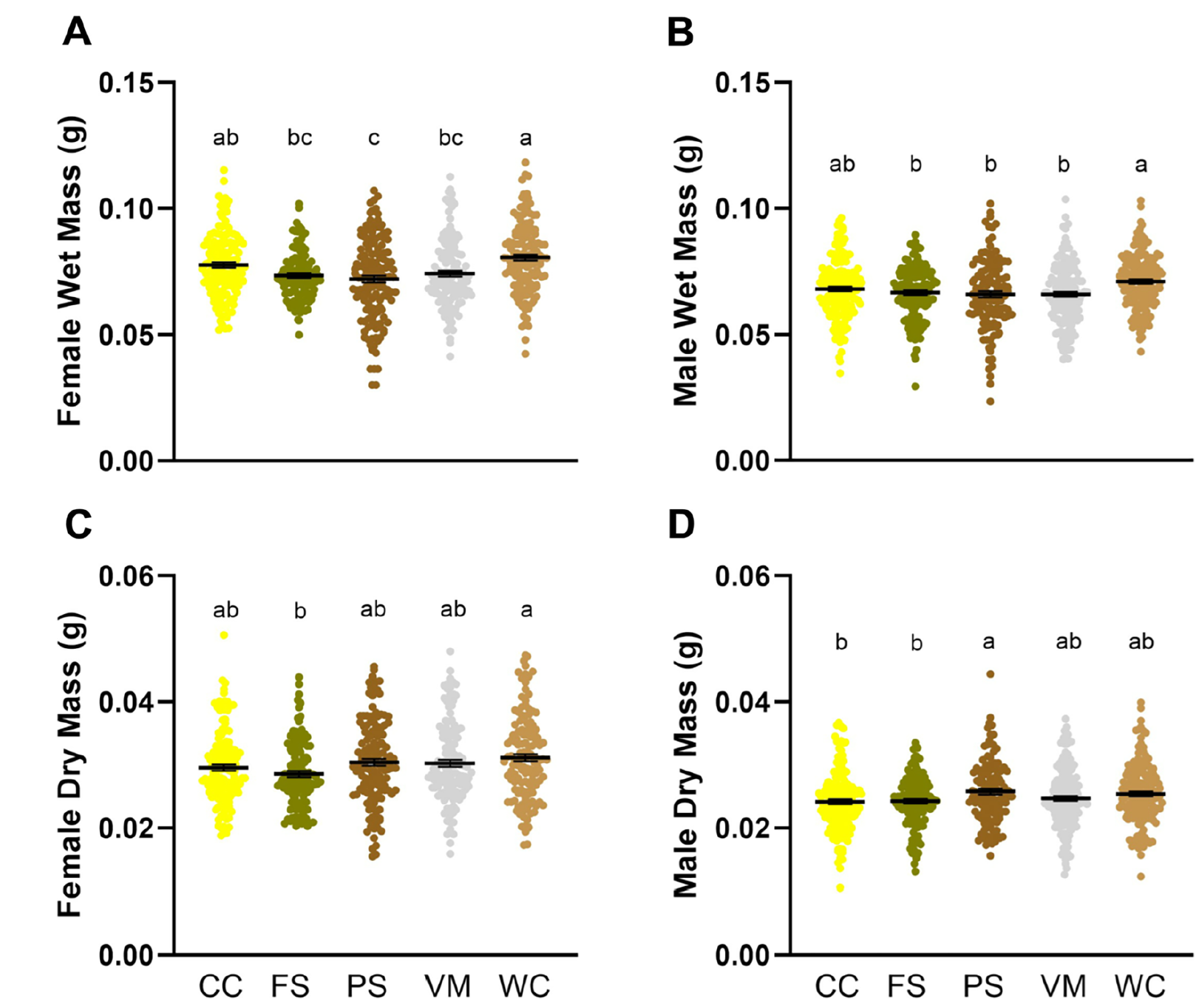
Substrate type significantly affected female (A, C) and male (B, D) mass. (A, C) WC resulted in the highest mean wet and dry mass for females; PS resulted in the lowest wet mass, and FS also resulted in reduced dry mass. (B, D) WC resulted in the highest mean wet mass for males, while PS resulted in a lower wet mass but highest dry mass; FS also resulted in reduced wet and dry mass for males. Letters on graphs indicate statistically significant differences among conditions (Tukey’s; p<0.05); horizontal black bar represents the mean with SE.
What are the main takeaways for producers?
Reduce the number of times, and the duration/intensity, of handling events at the prepupal life stage to the minimum necessary for farm procedures to maximize adult yield and speed up development.
Provide pupation substrates that maximize adult yield: wood chips and corn cob grits seem to perform best on most metrics. Frass performs worse, particularly when chronic handling is involved.
Substrate moisture above 20% doesn’t yield much impact on prepupal and pupal survival when humidity is 70-75% (as in our study)
Want to read more news from the lab?